
Your shopping cart is empty!
Categories
Latest 


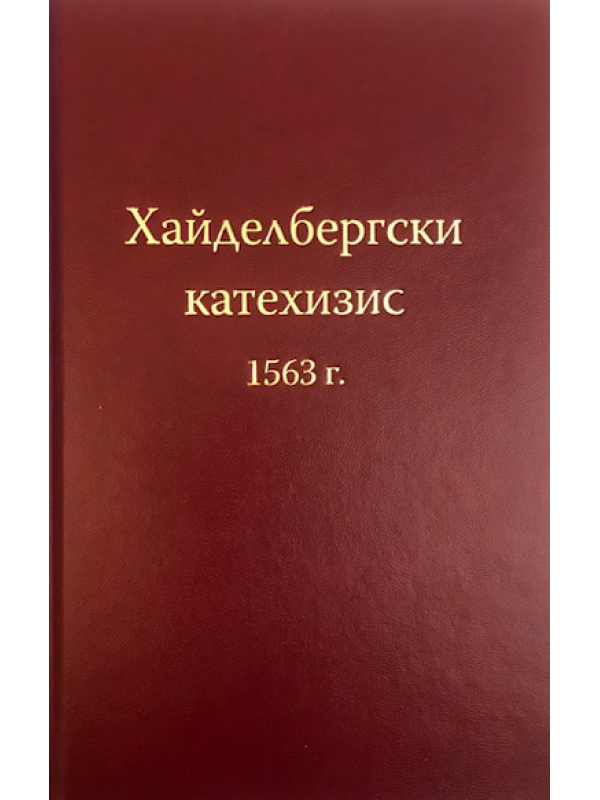
The Heidelberg Catechism (1563)

6.60€
Qty:
The Heidelberg Catechism (1563)
Хайделбергски катехизис 1563 г.
Language: Bulgarian
Cateogy: Theology
The Heidelberg Catechism (1563) was composed in the city of Heidelberg, Germany, at the request of Elector Frederick III, who ruled the province of the Palatinate from 1559 to 1576. The new catechism was intended as a tool for teaching young people, a guide for preaching in the provincial churches, and a form of confessional unity among the several Protestant factions in the Palatinate. An old tradition credits Zacharias Ursinus and Caspar Olevianus with being the coauthors of the catechism, but the project was actually the work of a team of ministers and university theologians under the watchful eye of Frederick himself. Ursinus probably served as the primary writer on the team, and Olevianus had a lesser role. The catechism was approved by a synod in Heidelberg in January 1563. A second and third German edition, each with small additions, as well as a Latin translation were published the same year in Heidelberg. The third edition was included in the Palatinate Church Order of November 15, 1563.
Table of contents
Влияние и значимост
Целта на Катехизиса
Авторът на Катехизиса
Някои мисли по съдържанието на Катехизиса
Подредба на Катехизиса
Хайделбергски катехизис
За човешката нищета
За изкуплението на грешника
Бог Отец
Бог Син
Бог Святи Дух
Святите тайнства
Святото кръщение
Святата вечеря на Господ Исус Христос
Благодарност
Десетте заповеди
Господната молитва
Последвала история на Катехизиса
Нови издания на Катехизиса
Публикации и преводи на Катехизиса
Противопоставяне на Катехизиса
Сегашното състояние на Катехизиса
| Details | |
| Publisher | Nov chovek |
| Language | Bulgarian |
| Pages | 94 |
| Illustrations | b/w figures |
| Binding | hardback |
| ISBN | 978-954-407-585-9 |
| Creation date | 2024 |
| Size | 14 х 21 cm |
Write a review
Your Name:Your Review: Note: HTML is not translated!
Rating: Bad Good
Enter the code in the box below:



© “Bibliophilia” Ltd. / © „Библиофилия“ ЕООД